

The original version of this post by was published in RWJF's Culture of Health Blog and can be accessed here.
As the executive director of Philadelphia Physicians for Social Responsibility in the late 1990s, I worked closely with the local police department, the Women’s Law Project, and the district attorney. At the time, these forward-thinking professionals were frustrated. They were arresting the second and third generation of families involved in the criminal justice system. I knew some of these same individuals, and their histories as survivors of childhood trauma.
We were witnessing the downstream effects of unaddressed trauma in early childhood. Children who grew up traumatized landed in the juvenile justice system first and eventually within the criminal justice system as adults.
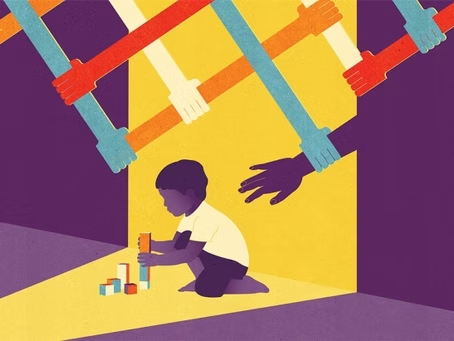
As a result, we knew we needed to find ways of building communities that would better support young children. Could we invest more upstream, in early childhood education, for example, and in doing so help prevent violence in our communities in the long-term?
Thanks to innovators like these and reams of new research on how early trauma and later violence affect individuals over a life course, we now understand that community conditions that impede children’s healthy development can impact everyone’s safety down the line.
We’re working alongside others to continue building evidence for and examples of communities that support the well-being of children and families. There is growing momentum to implement what we know—that early adversity like extreme poverty, violence, or neglect has long-term ramifications and that early stable and nurturing relationships have lifelong benefits. One example of this effort: Cradle to Community: A Focus on Community Safety and Healthy Child Development.
A collaboration between the Prevention Institute and the Center for the Study of Social Policy (CSSP), the project connects two fields that rarely work together: community violence prevention and early childhood development.
This work led to six recommendations for communities that are developing collaborative, place-based approaches to ensure that all of our children have a solid foundation of safety and to build a comprehensive support system for children affected by violence at any age. The Prevention Institute and CSSP developed these recommendations through the UNITY City Network and Early Childhood LINC.
The best thing? Efforts are already underway in reform-minded locales around the country to create great places for kids. In Baltimore, for example, the city health department is building on the success of B’more for Healthy Babies, a maternal and child health strategy. They are expanding comprehensive youth safety, wellness, and health programs for children from birth to age 5.
Housing this work in the health department helped leadership see the connections between child development and outcomes for children in the public health system. In California, First 5 Alameda County is supporting a comprehensive, place-based approach to supporting children in East Oakland’s Castlemont neighborhood. The project is taking a trauma- and resilience-informed approach and is connecting violence prevention with early childhood programming, housing, career opportunities, and education.
RWJF is also supporting several other comprehensive, place-based approaches to building communities where children thrive. Raising Places, for example, is using human-centered design principles to build healthier, child-centered communities. And the Mobilizing Action for Resilient Communities program brings together locales working to translate the science of Adverse Childhood Experiences (ACEs) into policies that foster resilience. Because communities that are good for children are not just good for children, they are good for everyone.
Consider how lessons from the report can benefit your community, and share what you’re already doing to create conditions where children and families can thrive in the comments below.
Martha Davis joined RWJF in 2014 as a senior program officer. Her work focuses on the root causes of violence, including child abuse and intimate partner violence. She seeks to address violence through her work in strengthening families to create nurturing, healthy environments that promote children’s positive development. Read her full bio.
Discover related works or visit our work page to view all projects.
All Our WorkNurturing Leadership from the community, for the community


